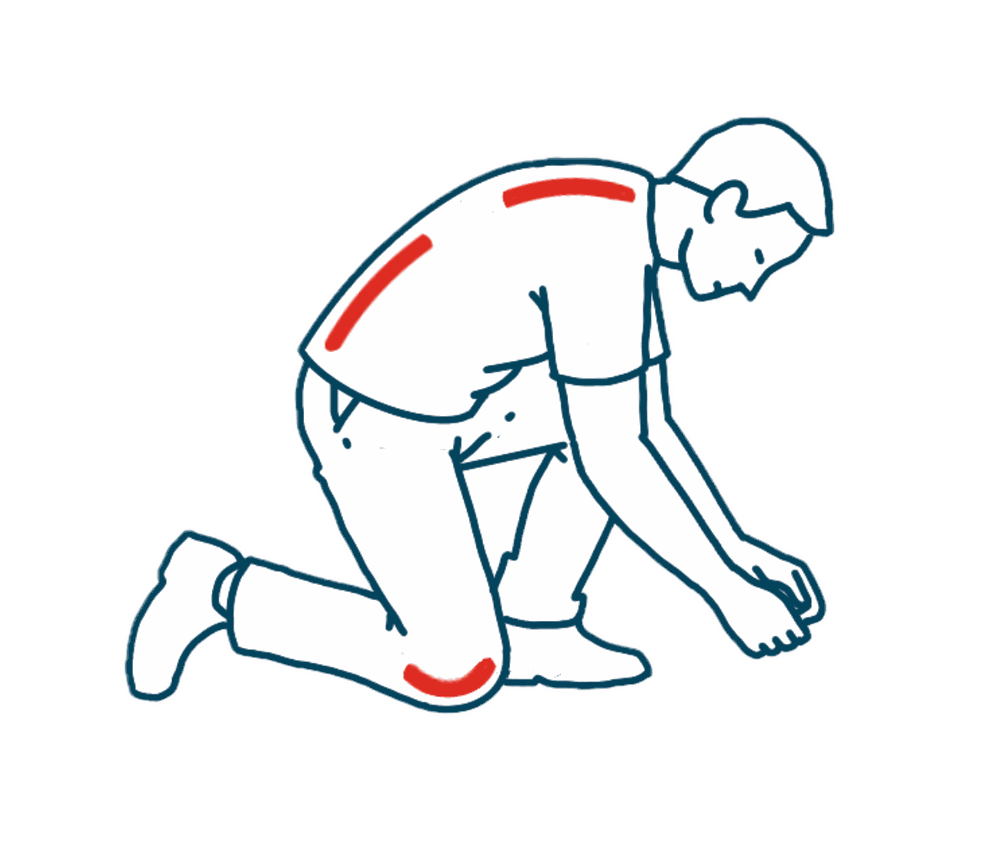
In foot care, a significant part of every day is spent forward-bent and still, low to the ground. The effort isn't the problem — the stillness is. Here's what it does, and why it's worth changing.

Is your daily posture shortening your career?
To protect the health and elevate the daily work of foot & lower-limb care specialists.
To become the ergonomic workstation for pedorthists, orthotists, podiatrists and prosthetists worldwide.
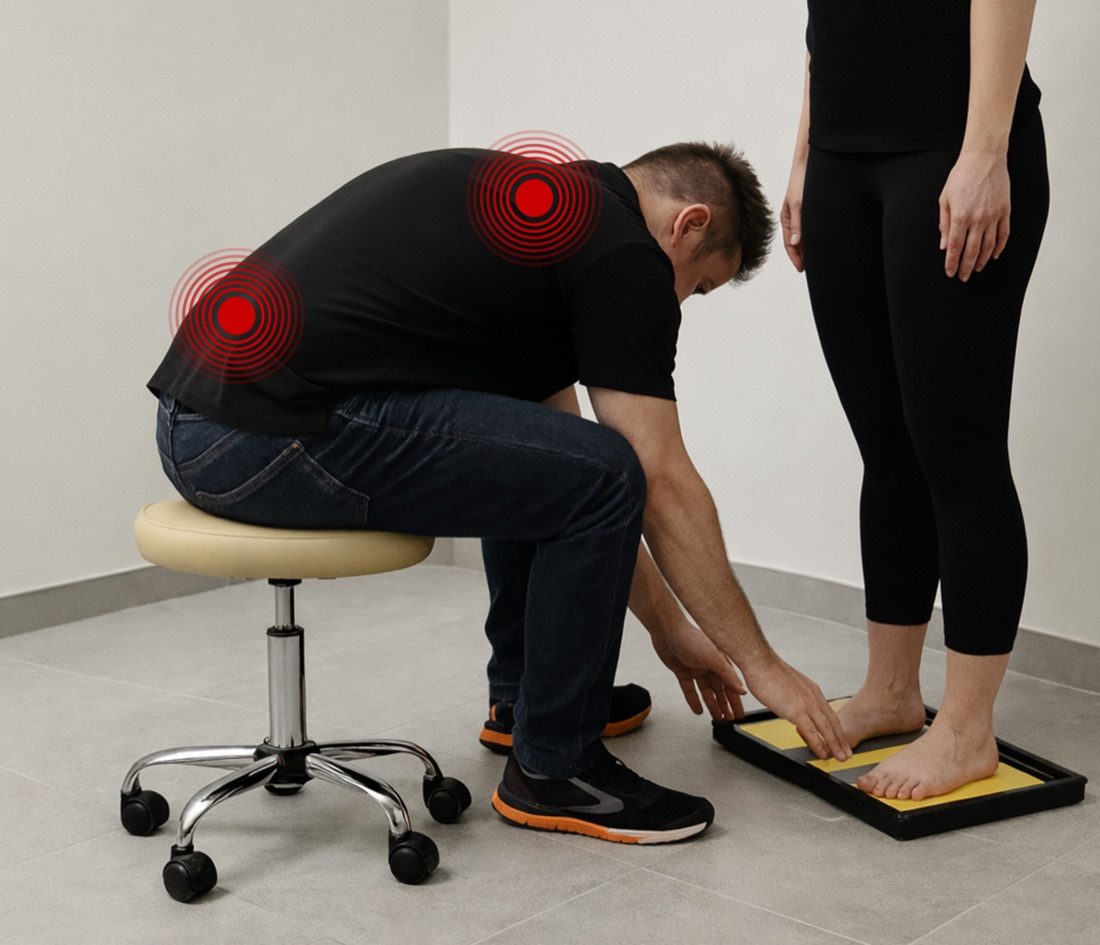
In foot care, a significant part of every working day is spent in a forward-bent, static position. During assessment, scanning and fitting, foot and lower-limb specialists often hold the same posture for extended periods, leaning forward with precision focus on work at or near floor level.
What makes this particularly damaging is not the effort involved, but the stillness. In a static posture, a limited set of muscle fibres fires continuously to hold the position, without the alternating contraction and relaxation that allows recovery. Local blood flow is restricted, waste products accumulate, and the tissue cannot repair itself between efforts.

Notice the head, too: to keep the working area in view, the neck is forced far forward and down — an unnatural position relative to the client, held still for the length of every treatment.
The risks are greater than most specialists realise
Prolonged static strain increases the long-term risk of musculoskeletal complaints significantly — yet it remains one of the least recognised occupational health issues in the profession.
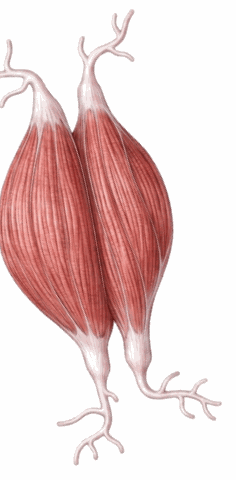
Muscles operate in a binary way: a fibre is either active or resting. Fibres are grouped into motor units, each controlled by a single nerve.
The number of fibres per unit reflects the task: precision work such as eye movement uses as few as 5 to 20 fibres per nerve, while large force-generating muscles recruit up to 2,000.
During dynamic movement, motor units take turns. This rotation supports local circulation and keeps tissue supplied with oxygen and nutrients. Heart rate rises in proportion to the effort, ensuring delivery keeps pace with demand.
During static postures, the same small group of fibres fires continuously with no rotation and no rest. Blood flow to those fibres is mechanically restricted by the sustained muscle tension. Heart rate stays low, delivery stays limited.
The result: metabolic waste accumulates in the tissue, recovery stalls, and fatigue sets in faster than most people expect.
Static postures create two simultaneous problems in the same muscle tissue: nothing comes in, nothing goes out.
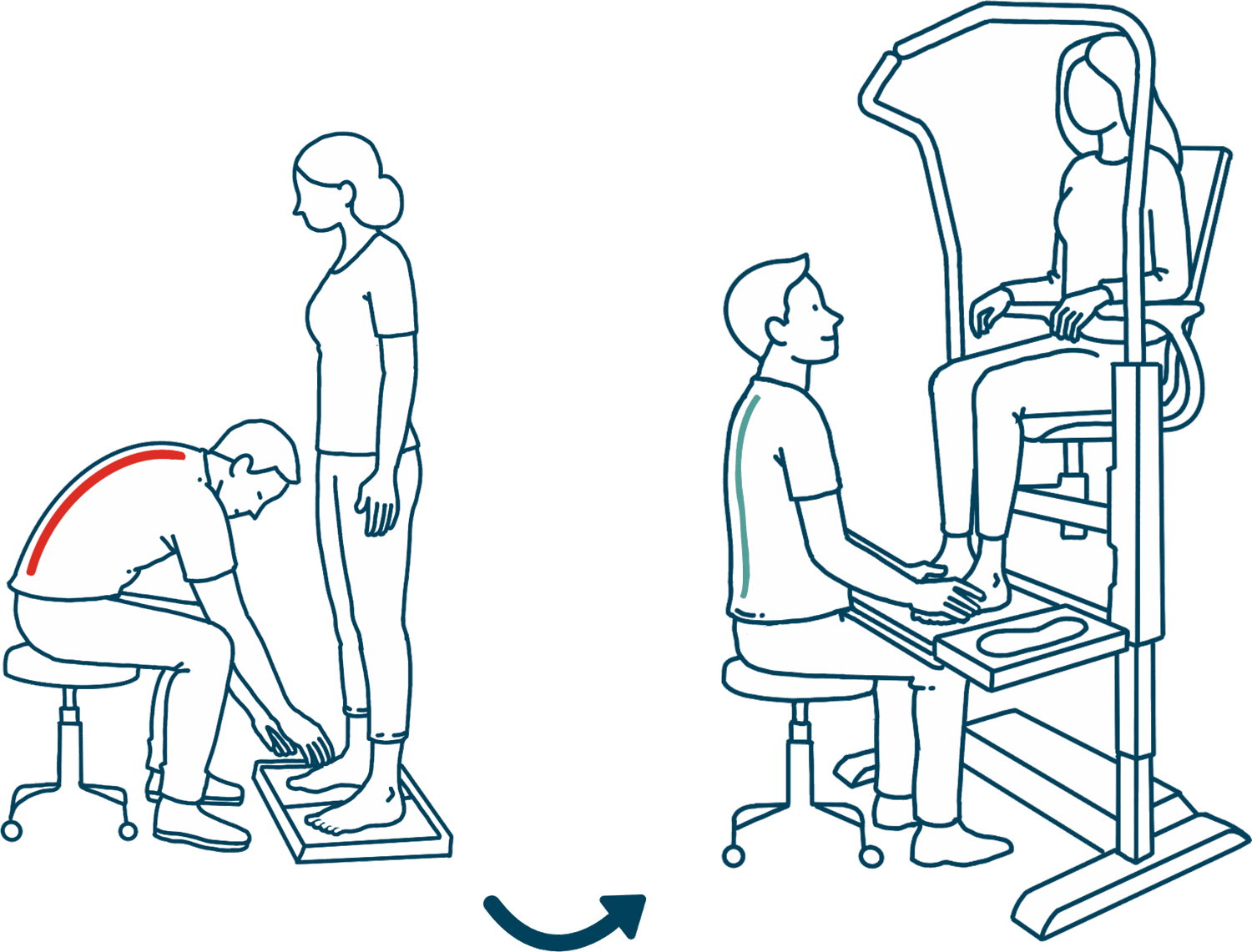
Sustained contraction compresses local blood vessels. Oxygen and nutrients cannot reach the active muscle fibres.
Metabolic waste accumulates in the tissue and cannot clear. Recovery stalls, even between sessions.
The combination leads to rapid micro-damage in muscle tissue — the starting point for long-term musculoskeletal disorders.
"Static strain is a silent killer. The damage builds slowly and unnoticed." — Hanneke Knibbe, IZZ / ZZP Magazine De Zorg
We're building an Ergonomic Database — research, references and practical guidance on posture and occupational health in foot care. Access requires a free registration.
Database content is being curated — register to be notified when it opens.
There's no obligation — only an open invitation to consider a better way of working.
Request information